
Closing your personal loan early: what you need to know
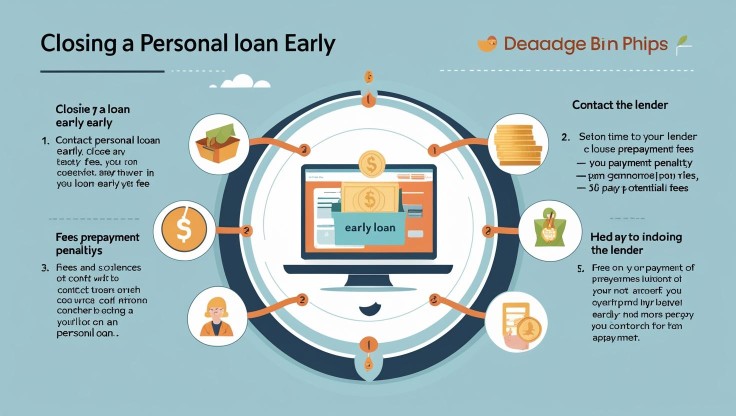
You’ve been paying your personal loan every month, and now you have some extra cash. Maybe you got a work bonus, sold something valuable, or just saved up. You’re thinking about paying off that loan and being done with it. Good idea – but let’s talk about how to actually do it without any surprises.
Why paying early saves you money.
Every month you have a loan, you’re paying interest. When you close it early, you stop those interest payments. That’s money back in your pocket. Plus, you get to use that monthly EMI amount for something else – maybe savings, maybe something you’ve been wanting to buy.
And here’s a nice bonus: once you pay off the loan, your credit score often gets better because you have less debt.
The catch: prepayment charges
Now here’s the part that feels unfair. Most banks will charge you a fee just for paying back your loan early. Yes, you’re giving them their money back, and they still want to charge you. It’s usually between 2% to 5% of whatever amount you still owe.
Let me give you an example. Say you still owe ₹2 lakh on your loan. If your bank charges 3% for early closure, you’ll pay ₹6,000 extra just to close it.
But there’s some good news. If you have a floating rate loan (where the interest rate can change), banks can’t charge you this penalty. That’s an RBI rule. They can only charge it on fixed-rate loans. You’ll need to check your loan papers to see which type you have.
Finding out what your bank will charge
First, dig out your loan agreement. Look for words like “prepayment” or “foreclosure.” That section will tell you what they’ll charge you.
Can’t find your papers? No problem. Just call your bank’s customer service number. Or log into your online banking – many banks list this info there. You can also walk into any branch and ask them to explain it.
Do the math before you decide.
You need to figure out if paying early actually saves you money. Here’s how to think about it.
Let’s say you owe ₹3 lakh with 2 years left at 14% interest. You’d pay around ₹45,000 in interest over those 2 years. If the bank charges 3% to close early, that’s ₹9,000. So you’d save about ₹36,000. That’s worth it.
But what if you only have 6 months left? The interest you’d pay is much less. It might be less than the prepayment fee. In that case, just keep paying your regular EMIs.
How to actually close your loan
Start by calling your bank. Tell them you want a foreclosure statement. This paper shows exactly how much you owe, including all charges. Usually, this amount is valid for about 7 to 15 days.
Next, you need to pay that amount. Most banks let you pay by demand draft, cheque, online transfer, or directly at the branch. Ask them which way they prefer.
After you pay, get a loan closure certificate from the bank. This is super important. It’s your proof that you don’t owe them anything. Keep it safe.
Also, ask the bank to update the credit bureaus. Sometimes they’re slow about this, and you want your credit report to show the loan is closed.
What if you can’t pay it all off?
Maybe you have some extra money, but not enough to close the whole loan. You can make a partial prepayment instead. This means you pay off a chunk of the loan while keeping your regular EMIs going.
Partial prepayments usually have charges too, though sometimes smaller ones. When you do this, the bank will ask if you want smaller EMIs or a shorter loan period. Choosing the shorter period saves you more money on interest.
Things that can trip you up
Some banks want advance notice before you can close your loan – maybe 15 to 30 days. You can’t just show up and pay it off today.
Make sure all your regular monthly payments are current. If you’ve missed any EMIs or they’re late, you need to fix that first.
Get everything in writing. When they tell you how much to pay, ask for an email or printed statement. Don’t trust what someone just tells you on the phone.
Save all your papers. Keep the payment receipts, the foreclosure statement, and especially that loan closure certificate. You might need these years from now.
What this does to your credit score
Paying off a loan early usually helps your credit score. It shows you’re responsible with money. You’ll have less debt, which looks good.
There’s one small thing, though. If this is your only loan, your “credit mix” changes. Credit scores like it when you have different types of credit. But honestly, being debt-free is better than keeping a loan just for your score.
Future lenders will see that you paid early. That tells them you’re good with money.
When you should NOT pay early
If the charges are really high and you’re almost done with the loan anyway, just finish paying normally.
If paying off the loan would empty your emergency savings, don’t do it. You should always have 3 to 6 months of expenses saved for emergencies. That’s more important.
If you have credit card debt, pay that off first. Credit cards charge way more interest (like 36-40%) than personal loans do.
If you found an investment that could earn you more money than your loan costs you in interest, investing might be smarter than paying off the loan.
Getting ready to close
Make yourself a simple checklist. Get the foreclosure statement. Arrange the money. Make the payment. Get your receipt. Get the closure certificate. Ask them to update the credit bureaus. Then check your credit report after a month or two to make sure it shows the loan as closed.
Set a reminder on your phone to check that credit report. Sometimes banks forget to update it.
Making the right choice
Closing your loan early can save you real money and get rid of that monthly payment. But you’ve got to check if the savings are more than what they’ll charge you.
Read your loan papers carefully. Understand what you’ll pay. Make sure you get all the right documents when you’re done.
If you’re confused about anything, make the bank explain it in simple terms. This is your money we’re talking about. Take your time, do the math, and make the choice that works for you.
Being debt-free feels amazing, but only do it if the numbers make sense.